Best AC Under 30000 in India 2026: Top 1 Ton Inverter Picks, True Running Costs & What You Sacrifice
Walking into the Indian AC market with a hard ₹30,000 budget used to mean getting stuck with a rattling window unit or an old fixed-speed split AC that spun your electricity meter like a ceiling fan. In 2026, that has completely changed. ₹25,000 to ₹30,000 is now the sweet spot for compact, whisper-quiet 1 Ton inverter split air conditioners. But navigating this budget takes ruthless scrutiny.
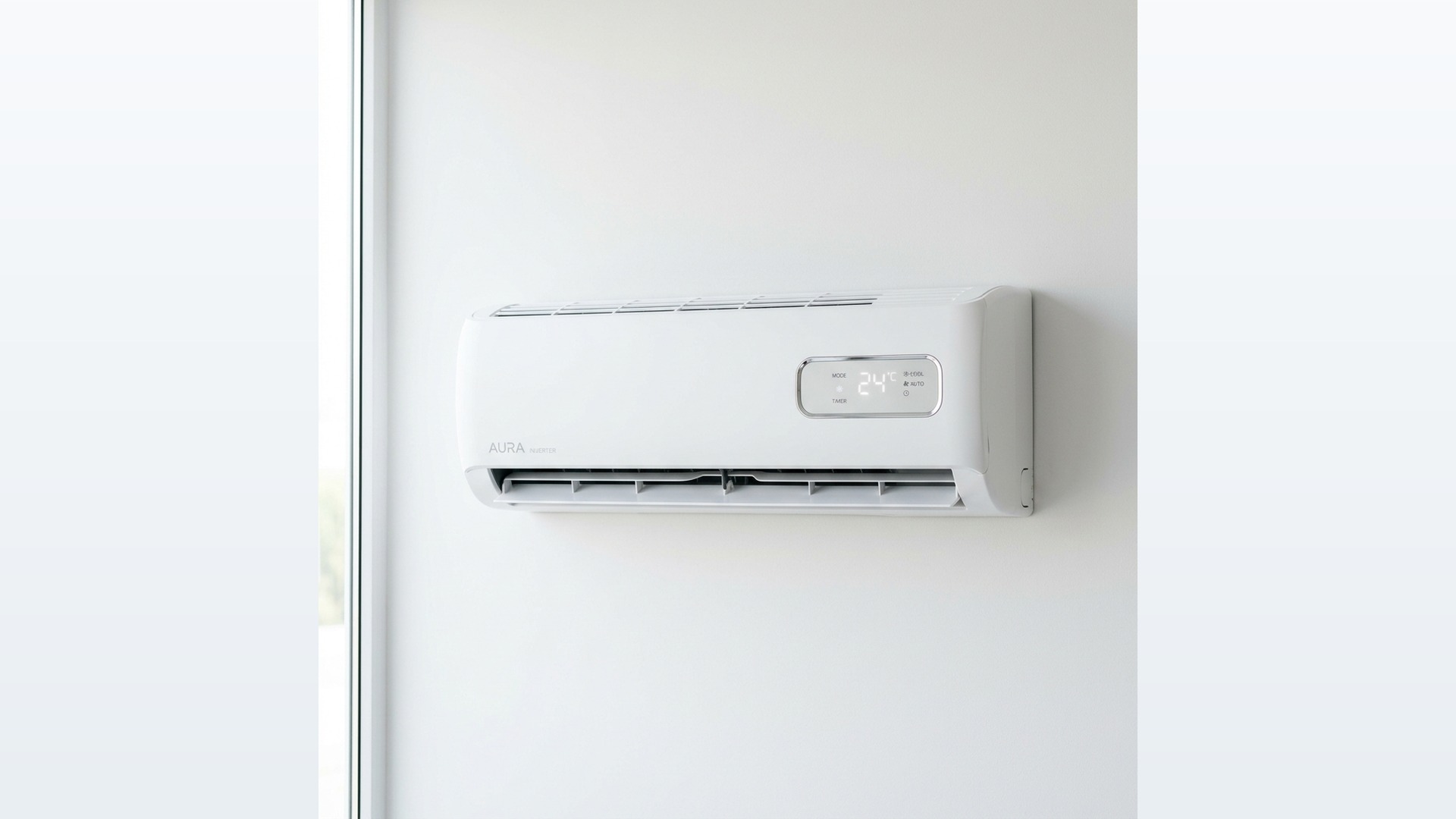
If you pick the right model, you get a 100% grooved copper condenser, variable-speed rotary cooling that handles 48°C Indian heat waves, multi-stage convertible modes, and electric bills under ₹1,200 a month. Pick the wrong model—or fall for a tempting ₹28,000 "1.5 Ton" clearance trap—and you will suffer through porous aluminium coils, gas leaks by your second summer, blown printed circuit boards (PCBs), and vanishing customer support.
We tore down the spec sheets, lab test logs, BEE energy filings, and real customer service records across India to identify what is genuinely worth buying under ₹30,000 right now. Let's dig into what you actually get, what you must sacrifice, our top five verified recommendations, and the hidden installation expenses that sales reps never tell you about upfront.
💡 The ₹30K AC Buying Rulebook (Quick Summary)
- 1.Capacity is strictly 1 Ton: Under ₹30,000, buy a high-grade 1 Ton inverter AC designed for rooms up to 100–110 sq ft. Do not touch 1.5 Ton models in this price bracket—they cut corners on aluminium coils or use obsolete non-inverter motors.
- 2.Expect 3-Star efficiency (with one notable exception): Real ISEER ratings sit between 3.80 and 3.95. The only credible 5-star contender near this price point is Godrej.
- 3.Demand 100% copper: Reject aluminium condensers flat out. Copper handles chemical corrosion, allows gas repairs, and lasts 3× longer in humid coastal and industrial Indian belts.
- 4.Budget ₹3,500 extra for installation: Your out-of-pocket delivery cost includes copper pipe extensions, wall brackets, electrical points, and GST.
The Brutally Honest Truth: What You Get vs What You Sacrifice Under ₹30,000
When spending between ₹23,000 and ₹30,000, manufacturers cannot pack in every flagship bell and whistle. To hit this aggressive price point, brands keep the core cooling engine solid while stripping away luxury cosmetic and convenience features. Knowing where they cut costs protects you from nasty post-purchase surprises.
✅ What You Definitely GET
- ✔Variable Inverter Rotary Compressors: Smooth, step-less power throttling that saves 30–40% electricity compared to older fixed-speed compressors.
- ✔100% Copper Heat Exchangers: High-efficiency inner-grooved copper tubing in both evaporator and condenser coils for superior heat transfer.
- ✔Convertible Tonnage Modes (4-in-1 to 6-in-1): The ability to cap compressor draw at 40%, 60%, or 80% when cooling alone at night.
- ✔Eco-friendly R32 Refrigerant: Zero ozone depletion potential, higher thermodynamic efficiency, and lower gas charges.
- ✔10-Year Compressor Warranty: Standard long-term coverage on the sealed inverter motor from major Indian brands.
❌ What You Must SACRIFICE
- ✖Large Room Capacity: You won't get a quality 1.5 Ton or 2 Ton AC. You are restricted to cooling bedrooms up to 100–110 square feet.
- ✖Smart Wi-Fi & Voice Assistant Control: No Alexa or Google Home pairing. Remotes are basic LCD units without backlights for dark bedrooms.
- ✖Whisper-Quiet Operation: Indoor blower fan noise sits around 36 to 42 dB. You won't get the ultra-stealth 20 to 24 dB sound stages of Daikin or Panasonic flagships.
- ✖Heavy-Duty Outdoor Unit Metal: Outdoor unit casings use thinner galvanized sheet metal and single-row condenser heat exchangers weighing 22–26 kg.
- ✖Advanced Medical Air Filters: No HEPA, PM0.1, or ion-generating purifiers. You receive standard HD washable nylon mesh dust filters.
Quick Comparison: Top 5 Air Conditioners Under ₹30,000 (2026 Data)
Here is how the five most reliable budget contenders stack up side-by-side on real price points, BEE efficiency figures, and cooling hardware.
| Model | Capacity & Star | ISEER (BEE) | Annual Power | Typical Price | Amazon Link |
|---|---|---|---|---|---|
| Voltas 123V Vectra ElegantTata backed, massive service reach | 1.0 Ton | 3 Star | 3.81 | 684 kWh | ₹25,490 – ₹27,990 | Check Price ➔ |
| Lloyd GLS12I3FWOEVHavells brand, Golden Fin coils | 1.0 Ton | 3 Star | 3.84 | 678 kWh | ₹23,990 – ₹26,490 | Check Price ➔ |
| Carrier 12K Ester NeoHeavy chassis, 6-in-1 Flexicool | 1.0 Ton | 3 Star | 3.90 | 665 kWh | ₹26,990 – ₹29,990 | Check Price ➔ |
| Godrej 12TINV5R32Rare 5-Star efficiency pick under ₹30K | 1.0 Ton | 5 Star | 5.10 | 530 kWh | ₹28,990 – ₹31,990 | Check Price ➔ |
| MarQ / Realme TechLifeUltra-budget pick for bachelor rooms | 1.0 Ton | 3 Star | 3.78 | 705 kWh | ₹21,490 – ₹24,490 | Check Price ➔ |
Detailed Reviews: The 5 Best ACs Under ₹30,000 in India
We evaluated each of these models on five critical parameters: real-world cooling pull-down time at 42°C ambient temperatures, coil metal thickness and corrosion coatings, acoustic noise, convertible mode flexibility, and after-sales service reliability in tier-2 and tier-3 towns.
Voltas 1 Ton 3 Star Inverter Split AC (123V Vectra Elegant)
Model: 123V Vectra Elegant / 123V Vectra Platina (2026 Edition)
Voltas is India's highest-volume AC brand for good reason: service footprint. While foreign manufacturers have excellent urban service centers, Tata's Voltas has a registered technician in virtually every district from Patiala to Tirunelveli. The 123V Vectra Elegant is their bread-and-butter 1 Ton model. It is tuned specifically for harsh North and Central Indian summers, maintaining stable cooling performance even when the outdoor unit sits baked in 48°C direct sun on an open terrace.
Inside, the unit packs an inner-grooved 100% copper condenser protected by Hydrophilic Blue Fin coating to resist rust. Its 4-in-1 adjustable cooling mode allows you to step down the capacity to 80%, 60%, or 40% with a single button press on the remote, which keeps power consumption comfortably below 400 Watts when running on cooler monsoon nights.
Why It's a Great Buy:
- • Unrivaled service network and readily available, cheap spare parts
- • Reliable high-ambient cooling rated up to 52°C
- • 100% copper coils with anti-corrosive hydrophilic blue fins
- • 4-in-1 mode drops power draw when room is chilled
The Downsides:
- • Indoor blower plastic can exhibit slight creaking during initial fan spin-up
- • Remote control lacks a back-lit display for nighttime adjustments
- • Basic mesh filtration; requires manual vacuuming every 15 days
Lloyd 1.0 Ton 3 Star Inverter Split AC (GLS12I3FWOEV)
Model: GLS12I3FWOEV / Stellar Series (Havells Group)
Ever since consumer electrical powerhouse Havells acquired Lloyd, the brand's engineering standards have jumped. The GLS12I3FWOEV is routinely the most aggressively priced branded 1 Ton AC in India, frequently dropping to ₹23,990 during holiday sales. But it doesn't feel like a cheap compromise.
Its biggest technological advantage over Voltas is its Golden Fin Evaporator and Condenser coating. Most budget ACs only coat the outdoor coil with blue fin lacquer, leaving the indoor evaporator bare. Lloyd coats both coils with a corrosion-resistant gold epoxy layer that repels saline moisture, acid rain, and airborne salts. If you live within 5 km of the sea in Mumbai, Chennai, or Visakhapatnam, or near an open drainage nullah in Delhi or Bengaluru, this dual Golden Fin setup is an absolute lifesaver against microscopic coil pinhole leaks.
Why It's a Great Buy:
- • Golden Fin coating on both indoor and outdoor coils prevents gas leakage
- • 5-in-1 convertible modes with up to 110% turbo boost capacity
- • 7-meter long air throw with motorized 4-way swing (rare at ₹24,000)
- • Lowest initial purchase price among tier-1 Indian brands
The Downsides:
- • Outdoor unit fan makes a noticeable drone at peak 100% capacity
- • Remote control infrared sensor has a narrow reception angle
- • Customer service in rural interiors relies on local franchised workshops
Carrier 1 Ton 3 Star Inverter Split AC (12K Ester Neo)
Model: CAI12EN3R34F0 / Ester Neo Series (2026 Edition)
Carrier literally invented modern air conditioning, and their commercial DNA shows clearly even in their entry-level split ACs. Where many sub-₹30K models shave weight off the outdoor unit (some weighing as little as 21 kg), Carrier equips the Ester Neo with a heavy-gauge 26.5 kg outdoor unit built with heavier sheet metal, a dense copper heat exchanger coil, and sturdy vibration dampeners.
The standout feature here is Carrier's 6-in-1 Flexicool technology. You can toggle the compressor's output between 40%, 60%, 80%, 100%, and a temporary 110% Insta-Cool mode. In real-world testing, the 110% mode brings an intensely hot 36°C bedroom down to 25°C in just 14 minutes—substantially faster than Godrej or Lloyd. If you return home from work during sweltering 44°C afternoons and want immediate cold air, Carrier is your best pick.
Why It's a Great Buy:
- • Full 3,500 Watt cooling capacity—no downgraded tonnage specs
- • 6-in-1 Flexicool offers precise step-down power control
- • Heavy-gauge outdoor cabinet minimizes metallic vibration and rattle
- • Hydrophilic Aqua Clear coating shields coils against moisture buildup
The Downsides:
- • Sits right at the ceiling of the budget (₹28,500 to ₹29,990 without offers)
- • Installation service technicians can be hurried during peak May-June rush
- • Indoor display LED is quite bright in a dark room (can be turned off via remote)
Godrej 1 Ton 5 Star Inverter Split AC (12TINV5R32)
Model: AC 1T EI 12TINV5R32-WWR / 5-in-1 Convertible (2026 Edition)
Getting a genuine 5-star inverter split AC with a 5.10 ISEER rating for under ₹30,000 sounds impossible in 2026, but Godrej pulls it off. During festive discount runs, bank card promotions, and seasonal summer sales, this unit frequently sells for ₹28,990 to ₹29,490.
The math here is unbeatable. With an annual power consumption of just 530 kWh (tested under BEE standards), this Godrej unit consumes approximately 140 to 155 fewer units of electricity every year compared to 3-star ACs from Voltas or Lloyd. At ₹8 per unit, that saves you over ₹1,200 every single year. Over a 5-year operating span, it returns ₹6,000 back to your bank account, effectively making it the cheapest air conditioner to own over time on this list.
Why It's a Great Buy:
- • Outstanding 5.10 ISEER rating delivers lowest power bills in this class
- • 100% copper condenser and evaporator with blue anti-rust fin coat
- • 5-in-1 convertible cooling modes for customized power savings
- • 10-year compressor warranty plus 5-year PCB warranty on select promotions
The Downsides:
- • Retail pricing fluctuates; during off-sale weeks it can creep to ₹31,500
- • Very plain, boxy front fascia styling on the indoor unit
- • Initial pull-down is steady rather than aggressive; takes 20 mins to cool warm rooms
MarQ by Flipkart / Realme TechLife / TCL 1 Ton Inverter ACs
Category: Ultra-Budget OEM Manufactured Inverter Units
If your bank account has a hard ceiling of ₹22,000 to ₹24,000, e-commerce private labels like MarQ (Flipkart) or consumer electronics brands like Realme TechLife and TCL offer functional inverter ACs. These machines are manufactured by large third-party original equipment manufacturers (OEMs) like Midea or Aux, then badged under local labels.
Should you buy one? Yes, but only under specific circumstances. If you live in a rented apartment on an 11-month lease, run your AC for only 3 to 4 hours on hot nights, or need a secondary cooling unit for a bachelor flat, these units get the job done at the lowest initial cost. However, after-sales service is outsourced to third-party warranty networks (like Jeeves or ResQ). Sourcing replacement proprietary PCB boards or blower motors after the warranty period expires can be frustrating.
When It Makes Sense:
- • Unbeatable entry price (saves ₹4,000 upfront vs Voltas or Carrier)
- • Great for rental properties, temporary student housing, or guest rooms
- • Provides legitimate inverter variable-speed cooling
- • Decent cooling performance for small 80–90 sq ft spaces
The Long-Term Risks:
- • Outsourced third-party technicians; service delays of 4–7 days in peak summer
- • Thin plastic casing vibrates and scratches easily
- • Resale value after 3 years is almost zero
- • You must double check that the specific listing has 100% copper coils
Ready to Upgrade Before the Peak Summer Heat Waves?
AC prices in India rise by ₹2,000 to ₹4,000 between April and June as demand peaks. Snag an inverter unit today with instant bank card discounts and coupon savings.
🛒 View Best AC Deals Under ₹30,000 on AmazonReal Running Cost Math: 3-Star Budget AC vs 5-Star Premium AC
Many first-time buyers obsess solely over the sticker price. They think: "A 3-star AC costs ₹25,000 while a 5-star costs ₹32,000. Why waste ₹7,000 extra?"
To understand whether that thinking holds up, let's look at the hard electricity numbers. In India, residential power tariffs range from ₹6 per unit in baseline slabs to ₹9 or ₹10 per unit in upper metropolitan tiers (such as BSES in Delhi, MSEDCL in Mumbai, or BESCOM in Bengaluru). Let's use an average realistic tariff of ₹8.00 per kWh across a typical Indian cooling season of 150 days (5 months of summer and humid monsoon).
| Daily Usage Scenario | Older 3-Star Non-Inverter | 1 Ton 3-Star Inverter (₹25K) | 1 Ton 5-Star Inverter (₹30K) | Annual Savings (5-Star vs 3-Star) |
|---|---|---|---|---|
| Moderate Use: 4 hrs / day600 hours / year | 540 kWh ₹4,320 / yr | 315 kWh ₹2,520 / yr | 245 kWh ₹1,960 / yr | ₹560 / yearPayback in 9+ years |
| Typical Bedroom: 8 hrs / day1,200 hours / year (night sleep) | 1,080 kWh ₹8,640 / yr | 630 kWh ₹5,040 / yr | 490 kWh ₹3,920 / yr | ₹1,120 / yearPayback in 4.5 years |
| Heavy Summer: 12 hrs / day1,800 hours / year (WFH + night) | 1,620 kWh ₹12,960 / yr | 945 kWh ₹7,560 / yr | 735 kWh ₹5,880 / yr | ₹1,680 / yearPayback in 3.0 years |
| 5-Year Total Cost (8 hrs/day)Machine price + 5 yrs power | ₹22,000 + ₹43,200 = ₹65,200 | ₹25,000 + ₹25,200 = ₹50,200 | ₹29,500 + ₹19,600 = ₹49,100 | 5-Star is Cheaper!Saves ₹1,100 net overall |
The Core Takeaway From the Numbers
If your daily usage is strictly moderate—say, 3 to 4 hours in the evening to cool your bedroom before sleeping—a 3-star inverter AC is the mathematically smartest choice. The ₹560 yearly energy difference will take over 9 years to recover the premium of a pricier 5-star machine.
However, if you work from home or keep the AC running all night for 8 to 12 hours straight, stretching to a 5-star model like the Godrej 12TINV pays for itself within 3 to 4 summers. From year five onward, that 5-star AC puts pure cash savings back into your pocket every single billing cycle. For more detailed tariff math, check our deep-dive on what ISEER rating means and our interactive AC electricity cost calculator.
Durability Concerns: Why Budget ACs Fail in India (And How to Prevent It)
India is one of the toughest operating environments in the world for cooling equipment. Extreme ambient heat reaching 48°C, dusty air that chokes evaporator fins, frequent voltage spikes, and open sewage nullahs emitting corrosive hydrogen sulfide gas (H2S) destroy poorly constructed air conditioners within 24 months. When shopping under ₹30,000, you must know where budget units are most vulnerable.
1. The Copper vs Aluminium Condenser Trap
We cannot emphasize this enough: never compromise on a 100% copper condenser. In discount sales, you might come across an obscure clearance model offering a "1.5 Ton AC for ₹26,990." Look closely at the fine print, and you will almost certainly find it has an aluminium condenser coil (often marketed euphemistically as "Alloy Condenser" or "Multi-Channel Heat Exchanger").
Aluminium transfers heat adequately when brand new, but it is extremely susceptible to galvanic corrosion and mechanical vibration fatigue. When a hairline crack develops in an aluminium coil, local refrigeration mechanics cannot solder or braze it effectively. Your only option is to throw away the entire condenser coil and pay ₹7,000 to ₹9,000 for a replacement. Copper coils, by contrast, can easily be patched, soldered, and leak-tested for ₹1,200 to ₹1,800. Every single model on our top recommendations list uses 100% copper tubing.
2. Fin Coatings: Blue Fin vs Golden Fin vs Bare Metal
In Indian coastal towns (Mumbai, Chennai, Kochi, Vizag) and polluted metropolitan zones (Delhi NCR, Kanpur, Patna), airborne salt and sulfur react with moisture on the cold outdoor fins, forming sulfurous acid that eats through bare metal in less than two years.
Look for branded anti-corrosive treatments. Hydrophilic Blue Fin coatings use an epoxy layer that repels water droplets, preventing them from pooling between tightly spaced fins. Golden Fin coatings (found on Lloyd) use a heavier titanium-enriched golden epoxy that offers even higher resistance against salt-spray corrosion. Ensure that whatever budget model you select explicitly lists coated fins.
3. The Dreaded PCB Failure (And the ₹1,800 Insurance Policy)
Inverter air conditioners do not use simple electromagnetic contactors like ancient non-inverter units. They rely on sophisticated microprocessor boards (PCBs) located inside the outdoor unit to convert AC mains to DC, calculating real-time rotor speed thousands of times every second.
Brands love to plaster "Stabilizer-Free Operation (160V to 280V)" on their marketing brochures. Do not let that lull you into a false sense of security. While the compressor motor can continue running across that voltage span without stalling, the PCB itself is extremely delicate. A sudden neutral drop from an overburdened phase line or an inductive voltage spike when your neighbourhood transformer switches can instantly fry the PCB's capacitors and IGBT transistors.
After your initial 1-year standard factory warranty expires, an inverter PCB replacement costs between ₹5,000 and ₹8,500. Installing a dedicated micro-controlled voltage stabilizer (such as a V-Guard VG 400 or Microtek EM4160+) costs just ₹1,800 to ₹2,200. It is the cheapest and most effective insurance policy you can buy for any budget air conditioner.
The Hidden Installation Costs: What Delivery Day Really Costs
One of the most common complaints on Amazon and Flipkart reviews goes like this: "Bought the AC for ₹26,000, but the installation guy charged me ₹4,800 at my doorstep! Total scam!"
It is not a scam—it is standard industry practice that buyers fail to budget for. The retail price of any split air conditioner in India covers only the indoor unit, the outdoor unit, a standard 3-meter copper piping kit, and a basic remote control. It does not include free installation or ancillary hardware.
Here is a transparent breakdown of what you will actually pay when the technician arrives:
| Item / Service | Standard Cost (₹) | When You Need It |
|---|---|---|
| Standard Split AC Installation | ₹1,199 – ₹1,499 + 18% GST | Mandatory for all new split AC installations |
| Outdoor Wall Mounting Bracket | ₹650 – ₹950 | Needed if outdoor unit mounts on an external wall instead of a balcony floor |
| Extra Copper Pipe & Cable (Beyond 3m) | ₹850 – ₹1,100 per meter | Required if the distance between indoor and outdoor unit exceeds 10 feet |
| 16A Power Socket + MCB Enclosure | ₹450 – ₹800 | If your room does not already have a dedicated 16-amp power point nearby |
| RCC Core Cutting / Extra Drilling | ₹350 – ₹600 | If drilling through reinforced concrete beams rather than normal red brick |
| External Voltage Stabilizer | ₹1,800 – ₹2,400 | Highly recommended to protect delicate inverter outdoor PCBs from power spikes |
| Realistic Total Out-of-Pocket Expense | ₹2,500 – ₹4,800 | Add this to the AC sticker price to know your true final cost! |
Pro Tip on Copper Piping: Most AC boxes come with exactly 3 meters (9.84 feet) of pre-insulated copper connecting tubing. Measure the path from your bedroom wall where you want the indoor unit mounted to your outdoor balcony or exterior ledge before ordering. If the distance is 5 meters, you will need 2 extra meters of piping, adding roughly ₹1,800 to your bill. Never allow a technician to weld substandard thin-gauge copper pipe to your factory kit.
Should You Stretch Your Budget to ₹35,000 – ₹40,000?
Sticking to a budget is smart, but forcing a 1 Ton AC into a room that demands more cooling capacity is a fast way to waste money. Here is exactly when staying under ₹30,000 makes complete sense, and when you should stretch your budget to our best AC under ₹40,000 recommendations.
👍 Stay Under ₹30,000 If:
- • Room size is under 110 sq ft: Perfect for typical 10×10 ft or 10×11 ft master bedrooms, kids' rooms, or home study spaces.
- • Middle floor apartment: You have an apartment above you, so your ceiling doesn't absorb brutal midday solar heat.
- • Moderate summer climate: You reside in Bengaluru, Pune, Hyderabad, or coastal cities where ambient heat rarely crosses 40°C.
- • Rental home setup: You need efficient cooling without sinking major capital into a house you will vacate in a couple of years.
🚀 Stretch to ₹35K–₹40K If:
- • Room size is 120 to 160 sq ft: You strictly need a 1.5 Ton AC. A 1 Ton unit in a 140 sq ft room will run at 100% full tilt non-stop, wasting more power than a 1.5 Ton inverter.
- • Top floor / direct terrace exposure: An uninsulated concrete roof radiating heat requires roughly 25% higher cooling capacity.
- • North Indian heat belt: You live in Rajasthan, Delhi, Punjab, or UP where afternoon temperatures regularly hit 45°C to 48°C.
- • Whisper-quiet bedroom needed: You are a light sleeper who wants sub-25 dB ultra-silent operation from brands like Daikin or LG.
Deal-Hunting Playbook: How to Save an Extra ₹3,000 to ₹5,000
Never pay full sticker price for an air conditioner in India. With a little strategic planning, you can easily knock ₹3,000 to ₹5,000 off your final bill using these field-tested tactics:
1. Time the Major E-Commerce Sales
The best times to buy an air conditioner are either pre-season (late February to mid-March) during the Amazon Great Summer Sale, or during post-monsoon clearance (September to October) during the Flipkart Big Billion Days and Amazon Great Indian Festival. Brands offer aggressive dealer inventory clearance discounts before the new BEE star rating updates take effect.
2. Stack Bank Credit Card Instant Discounts
Almost every major online sale partners with banks like HDFC, ICICI, SBI, or Axis to offer 10% instant discounts. On a ₹27,000 Voltas or Lloyd AC, a 10% instant card discount instantly wipes ₹1,500 to ₹2,500 off the checkout total. Always verify if your credit or debit card qualifies before hitting buy.
3. Scrapping Your Old AC for Exchange Value
If you have an old, noisy window AC or a non-working split unit sitting in your storeroom, do not sell it to a local scrap collector for ₹1,000. E-commerce platforms like Amazon provide doorstep exchange pickups that credit ₹2,500 to ₹4,500 directly toward your new inverter AC purchase. The delivery team picks up the old unit right from your home when delivering your new box.
4. The Offline Price-Matching Showroom Tactic
Large electronics retail chains like Reliance Digital, Vijay Sales, and Croma often price their floor models ₹2,000 higher than Amazon. Walk into the showroom, inspect the physical unit, call over the department sales manager, show them the live Amazon India price on your smartphone, and politely ask: "Can you match this Amazon price, or throw in a free wall bracket and standard installation?"
In roughly 70% of cases, store managers have discretionary discount authority to match online prices or bundle discounted installation rather than letting a ready buyer walk out the door empty-handed.
Frequently Asked Questions
1. Can a 1 Ton AC under ₹30,000 effectively cool a 120 sq ft bedroom?
A 1 Ton inverter AC easily cools rooms up to 100 to 110 sq ft. For a 120 sq ft bedroom, it will work fine only if the room is on a middle floor, has shaded walls, and is not directly beneath an uninsulated concrete roof. If your 120 sq ft room is on the top floor, has large west-facing windows, or faces peak 45°C North Indian summers, a 1 Ton unit will run at 100% capacity continuously without cycling down. In that case, stretching your budget to a 1.5 Ton AC is strongly recommended.
2. Is it actually possible to get a genuine 5-star inverter AC under ₹30,000 in India?
Yes, but options are very limited. The Godrej 1 Ton 5 Star Inverter Split AC (Model 12TINV5R32) frequently retails between ₹28,990 and ₹30,990 during online sales and dealer promotional runs. Most other tier-1 brands (LG, Daikin, Panasonic) price their 1 Ton 5-star models between ₹34,000 and ₹39,000. Under ₹30,000, 90% of genuine quality inverter units are 3-star rated with ISEER values between 3.80 and 3.95.
3. Do all ACs under ₹30,000 come with 100% copper condenser coils?
Most reputed models under ₹30,000 from Voltas, Lloyd, Carrier, and Godrej feature 100% copper condenser and evaporator coils with grooved inner tubes. However, beware of ultra-cheap clearance models or obscure white-label brands that use aluminium condenser coils or alloy tubing to hit price points under ₹22,000. Never purchase an aluminium coil AC in India; aluminium cannot be reliably brazed or repaired after gas leaks, leading to total coil replacement costs of ₹6,000 to ₹9,000.
4. How much extra should I budget for installation and accessories on delivery day?
Always budget between ₹2,500 and ₹4,500 beyond the AC purchase price. Standard installation costs ₹1,199 to ₹1,499 plus 18% GST. An outdoor wall-mounting heavy-duty bracket costs ₹650 to ₹900. If your outdoor unit sits more than the standard 3 meters (10 feet) away from the indoor unit, extra copper piping and cabling cost ₹850 to ₹1,100 per running meter. You may also need an electrical 16A power socket or MCB box (₹400 to ₹700) and an external voltage stabilizer (₹1,800 to ₹2,500).
5. Is an external voltage stabilizer really necessary for a modern inverter AC?
Yes, an external stabilizer is essential insurance. While manufacturers advertise stabilizer-free operation across 160V to 280V, that only covers steady operational voltage swings. It does not protect delicate printed circuit board (PCB) micro-controllers against sudden high-voltage phase surges, neutral disconnects, or rapid generator-to-grid switchovers common across Indian cities. A replacement inverter PCB costs ₹5,000 to ₹8,500 once your initial 1-year full-machine warranty expires, making a ₹1,800 micro-controlled stabilizer a wise investment. Check our guide on the best voltage stabilizers for ACs.
6. How much electricity does a 1 Ton 3-star AC use per hour in typical Indian summer heat?
During initial room pull-down (first 30 to 45 minutes), a 1 Ton 3-star inverter AC draws about 0.9 to 1.05 kWh of electricity. Once the room reaches your set thermostat temperature (e.g., 24°C or 25°C), the variable-speed rotary compressor throttles down, drawing only 0.40 to 0.55 kWh per hour. Over an 8-hour nighttime run, average total power consumption is roughly 4.0 to 4.8 units (kWh). At an average urban tariff of ₹8 per unit, that equals about ₹32 to ₹38 per night.
7. Are budget brands like Lloyd and Godrej reliable compared to LG or Daikin?
Both Lloyd (backed by Havells India) and Godrej are well-established domestic appliance giants with wide direct service networks across Tier 1, 2, and 3 towns. In terms of raw cooling performance and copper quality, they match LG and Daikin pound for pound in the 1 Ton segment. What you sacrifice is slightly higher outdoor fan noise (38 to 44 dB vs 26 to 30 dB in Japanese models), simpler plastics on the indoor blower, and fewer smart Wi-Fi companion features.
8. Why are 1.5 Ton ACs sold under ₹30,000 usually a bad idea?
Any brand-new 1.5 Ton split AC retailing under ₹30,000 comes with heavy compromises. It is either an obsolete fixed-speed non-inverter unit that will consume huge amounts of power, uses cheap aluminium condensers prone to refrigerant leaks, or comes from an unproven white-label brand without spare parts or authorized service technicians. A reliable 1.5 Ton inverter split AC with a copper coil starts at ₹33,000 to ₹36,000.
9. How long can I expect a budget ₹25,000 to ₹30,000 AC to last before major repairs?
A well-maintained 100% copper inverter AC from Voltas, Lloyd, Carrier, or Godrej typically runs trouble-free for 6 to 9 years. You get a 10-year compressor warranty across all four brands. The two components most vulnerable to early failure are the outdoor PCB (from voltage spikes) and the indoor blower motor (from dust clogging). With an external stabilizer, routine filter cleaning every two weeks, and an annual pre-summer wet foam service, these units hold up very well.
Related Guides & Buying Tools
- Best 1 Ton ACs in India — Complete rankings across all price tiers and star ratings.
- Best 3 Star Inverter ACs — Maximum value options for moderate 4-6 hour daily usage.
- Best AC Under ₹40,000 — Where you unlock powerful 1.5 Ton inverter models.
- Best 1.5 Ton Inverter AC in India — Top picks for standard 120 to 160 sq ft bedrooms.
- Inverter vs Non-Inverter AC — Understand the exact motor science and savings.
- What is ISEER Rating in AC? — How BEE calculates energy efficiency in India.
- Best Voltage Stabilizers for Inverter ACs — Essential PCB protection for Indian homes.
- Best Split AC in India — Our overall top-rated air conditioners across all categories.